
Calorie Deficit Calculator for Women: A Simple Plan to Find Your Number

You've probably saved a post that says "just eat in a calorie deficit." Solid advice, until you try to follow it and realise nobody told you how many calories that means for you. Is it 1,200? 1,500? Does it change if you walk a lot or sit at a desk all day?
If you've been guessing, you're in good company. A calorie deficit sounds technical, yet it comes down to a few numbers you can work out in about five minutes. Once you have them, food decisions get a lot simpler.
This guide walks you through what a calorie deficit is, how to calculate yours step by step, how big it should be, and what a day of eating in a deficit looks like. By the end, you'll have a daily calorie number, a simple plan around it, and a few tricks for the days it gets hard.
What is a calorie deficit?
A calorie deficit means eating fewer calories than your body uses in a day. Your body spends energy all day long on breathing, digesting, thinking, and moving. When you eat less than that total, it covers the gap with stored energy, including body fat. Over time, that gap shows up as weight loss.
Two terms are worth knowing:
- TDEE (Total Daily Energy Expenditure): the calories you burn in a full day, including daily movement and exercise. Eating around this number keeps your weight steady.
- Calorie deficit: the number of calories you eat below your TDEE.
A long-used rule of thumb says a total deficit of about 3,500 calories equals around 1 lb (0.45 kg) of body fat, which puts a 500 calorie daily deficit near 1 lb a week. Mayo Clinic describes this as an estimate and bodies vary, so treat it as a starting point you adjust as you go. The CDC points to a gradual, steady pace as the one people are more likely to keep up.
How to calculate your calorie deficit, step by step
Here's the full process with an example. Say you're 32, 5'6" (168 cm), 170 lb (77 kg), and you walk and work out lightly a few times a week.
Step 1: Estimate your BMR
BMR is the energy your body uses at rest. A common formula for women (Mifflin St Jeor) is:
(10 × weight in kg) + (6.25 × height in cm) − (5 × age) − 161
For our example: 770 + 1,050 − 160 − 161 = about 1,500 calories.
Step 2: Multiply by your activity level
- Mostly sitting, little exercise: × 1.2
- Light activity, 1 to 3 workouts a week: × 1.375
- Moderate activity, 3 to 5 workouts a week: × 1.55
- Very active, 6 to 7 workouts a week: × 1.725
Example: 1,500 × 1.375 = about 2,060 calories. That's your TDEE.
Step 3: Subtract your deficit
Take off 300 to 500 calories. In our example, 2,060 − 500 = about 1,560 calories a day.
Step 4: Check your floor
For most women, eating under about 1,200 calories a day is hard to sustain and can leave you tired and hungry. If your number lands below that, choose a smaller deficit.
Easy starting point: Write your daily calorie number on a sticky note and put it where you'll see it, like the fridge or your phone lock screen.
Weight loss calculator
Add your numbers to see how long your goal could take
How big should your calorie deficit be?
A bigger deficit gives faster results on paper, and a smaller one gives you something you can keep up. Here's how the common sizes compare:
- 250 to 300 calories a day: about 0.5 lb a week. Slow and steady, easiest to live with, good if you're already active or close to your goal.
- 500 calories a day: about 1 lb a week. The usual starting point for most women.
- 750 calories a day: about 1.5 lb a week. Only with more weight to lose and a target that stays above 1,200 calories.
Larger deficits tend to bring more hunger and lower energy, and they raise the chance of stopping by week three. A moderate deficit you can keep for months usually beats an aggressive one you drop after ten days.
Calorie deficit examples for women
Here's what daily targets can look like at different TDEE levels:
- TDEE 1,800: 1,500 with a 300 calorie deficit, 1,300 with a 500 calorie deficit
- TDEE 2,000: 1,700 with a 300 calorie deficit, 1,500 with a 500 calorie deficit
- TDEE 2,200: 1,900 with a 300 calorie deficit, 1,700 with a 500 calorie deficit
- TDEE 2,400: 2,100 with a 300 calorie deficit, 1,900 with a 500 calorie deficit
These are starting points. If you feel constantly drained after two weeks, move up toward the smaller deficit. If you feel great and the scale isn't moving after three to four weeks, check your tracking before cutting more.
A simple calorie deficit plan you can start today
You don't need a complicated system. Six small steps cover most of it:
- Set your number. Use the steps above or the free guide.
- Build meals protein first. Eggs, Greek yogurt, chicken, fish, tofu, beans, or lentils. Aim for 25 to 30 g at each meal.
- Fill half your plate with vegetables. They add volume and fibre for very few calories.
- Pick a go to breakfast and lunch. Fewer daily decisions make your number easier to hit.
- Walk every day. A 10 to 15 minute walk after meals adds up quickly.
- Weigh in weekly. Same morning, after the bathroom, before eating. Look at the trend over three to four weeks.
Tip: Log tomorrow's dinner tonight. Knowing your evening meal in advance helps you plan lighter calories earlier in the day.
These two tools make the numbers in this guide easier to follow.
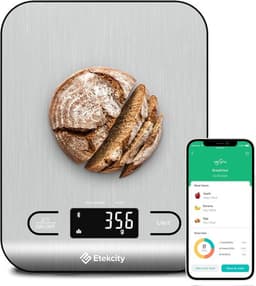 For accurate portionsDigital food scale with grams and ounces and a large displayWeighing food takes the guesswork out of portions, so your calorie count matches what you actually ate.
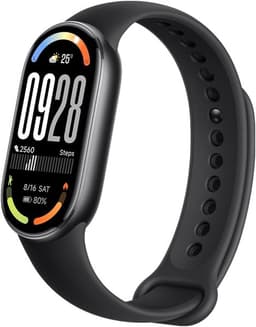 For daily movementLong battery life step tracker band with a bright touchscreenA simple wrist tracker that counts your steps, so you can see your daily movement at a glance.
Calorie deficit meals and breakfast ideas
These are easy meals that fit most deficit targets. Calories are approximate and depend on your portions.
- Greek yogurt bowl with berries and a spoon of granola: about 250 to 300 calories
- Veggie omelette (2 eggs and vegetables) with a slice of toast: about 300 to 350
- Chicken burrito bowl with rice, beans, salsa, and lettuce: about 450 to 500
- Big salad with tuna or chicken and an olive oil dressing: about 400
- Lentil soup with a side salad: about 350
- Baked salmon with roasted vegetables and potatoes: about 500
- Tofu or shrimp stir fry with lots of vegetables and a small portion of rice: about 450
Mix and match these across the day to land near your target.
How to stay in a calorie deficit without feeling hungry
Hunger is the main reason people stop. These habits make a real difference:
- Eat protein at every meal. It keeps you full for longer than carbs or fats alone.
- Add volume. Vegetables, fruit, soup, and potatoes fill your plate for relatively few calories.
- Watch liquid calories. Lattes, juice, smoothies, and alcohol add up fast and rarely feel filling.
- Sleep 7 or more hours. Short sleep raises hunger and cravings the next day.
- Plan your snacks. Portion a snack into a bowl instead of eating from the packet.
- Plan your weekends. A 500 calorie deficit from Monday to Friday adds up to 2,500. Two weekend days that run 600 calories over your target would take back 1,200 of it.
How long should you stay in a calorie deficit?
Many people run a deficit for 8 to 12 weeks, then recalculate. As you lose weight, your TDEE drops a little, so your target should shift too. Recalculate after every 5 to 10 lb lost.
If you feel run down, a week or two eating at maintenance can help you reset before going back in. If you have a lot to lose, working in blocks usually feels better than one long stretch.
Common calorie deficit mistakes to avoid
- Starting too low. A very small target is hard to keep and often leads to a binge by day four.
- Forgetting drinks, oils, and sauces. They can add 200 to 300 calories a day without you noticing.
- Judging progress by one weigh in. Water, salt, and your cycle move the scale daily. Use the weekly trend.
- Never recalculating. Your target needs a refresh as your weight changes.
- Eating back workout calories. Calorie estimates from watches and machines can be off, so treat workout calories as a bonus instead of something to eat back.
Ready to stay consistent with your calorie target?
Peak Glow Club is a community of women doing glow up challenges together starting with the 75 challenge. You choose your style (Hard, Medium, Soft, or Custom), pick up to five habits, check in each day on your progress, and watch your streak grow on the leaderboard.
Ready to lock in?
Keep reading: How to Lose Weight When You Don't Know Where to Start, How To Build Consistent Healthy Habits and 10 Glow Up Habits That Actually Change Your Life.
Calorie deficit FAQ
A quick note: If you have a health condition, take regular medication, are pregnant or breastfeeding, or have a history of disordered eating, check in with your doctor or a registered dietitian before changing how you eat.